






Best I2C Character LCD Modules For Embedded Systems
Best I2C Character LCD Modules for Embedded Systems
Character LCD modules remain one of the most practical and widely used display solutions in embedded systems. From simple sensor readouts to industrial control panels, they offer reliability, low power consumption, and easy integration. When combined with I2C communication, these displays become even more powerful by reducing wiring complexity and saving valuable GPIO pins on microcontrollers.
This article explores the best I2C character LCD modules, their advantages, and how to choose the right one for your embedded project.
What is an I2C Character LCD Module?
character LCD is a display that shows alphanumeric characters in fixed rows and columns, commonly in formats like 16x2 or 20x4. Traditional LCDs require multiple GPIO pins for control and data transfer, which can quickly exhaust microcontroller resources.
An I2C LCD module solves this by adding an I2C “backpack” (commonly based on the PCF8574 I/O expander chip). This allows the LCD to be controlled using just two wires:
- SDA (Serial Data)
- SCL (Serial Clock)
This dramatically simplifies wiring and makes integration easier for platforms like Arduino, Raspberry Pi, ESP32, and STM32.
Why Use I2C LCD Modules in Embedded Systems?
I2C character LCDs are popular because they strike a balance between simplicity and functionality.
1. Reduced Wiring Complexity
Instead of 6–12 GPIO pins, you only need 2 communication lines plus power.
2. Saves Microcontroller Pins
Ideal for projects where GPIO is limited, such as sensor-heavy systems.
3. Easy Expansion
Multiple I2C devices can share the same bus, allowing LCDs, sensors, and modules to coexist.
4. Compatibility
Works with most microcontrollers and development boards without special hardware.
5. Cost-Effective
I2C LCD modules are inexpensive and widely available.
Best I2C Character LCD Modules
Here are some of the most commonly used and reliable I2C character LCD modules for embedded applications.
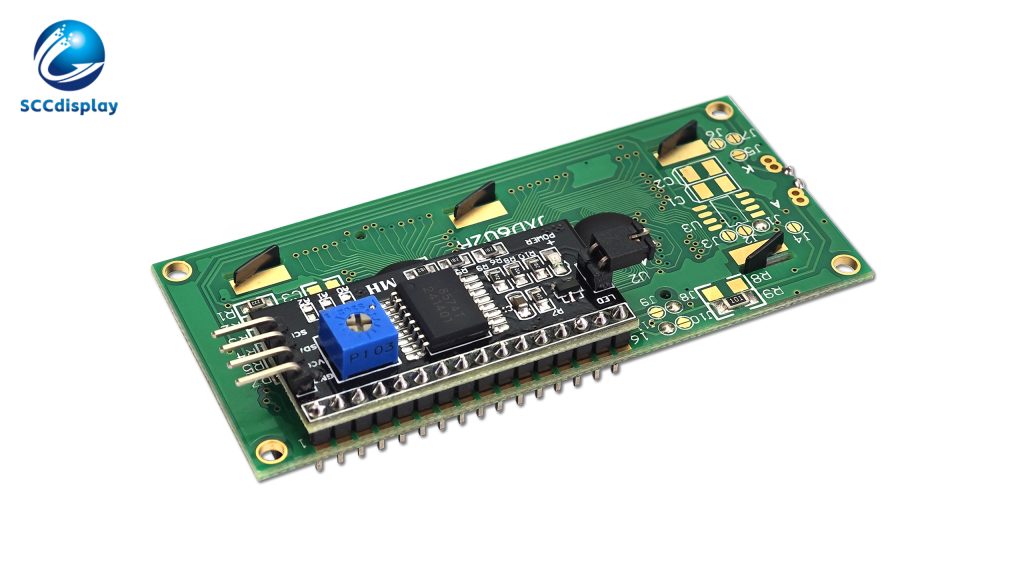
1. 16x2 I2C LCD Module (HD44780 + PCF8574)
This is the most popular and beginner-friendly LCD module.
Key Features:
- 16 characters × 2 lines
- Based on HD44780 controller
- I2C interface via PCF8574 expander
- Adjustable contrast via onboard potentiometer
- Backlight control support
Why It’s Popular:
- Extremely easy to use
- Supported by virtually all microcontroller libraries
- Perfect for simple sensor displays (temperature, humidity, voltage)
Common Use Cases:
- Arduino starter projects
- Home automation systems
- Battery monitoring displays
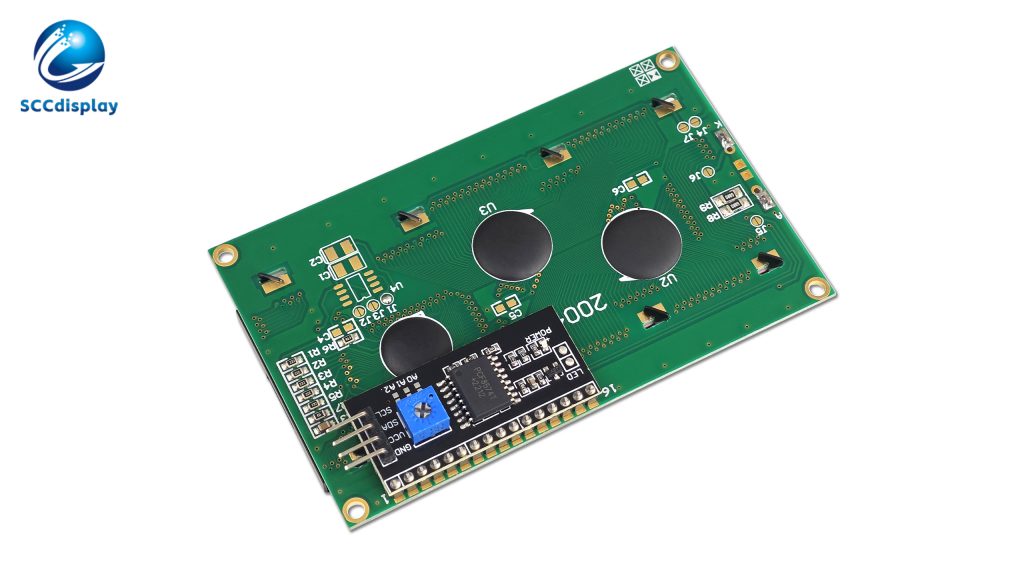
2. 20x4 I2C LCD Module
This module provides more screen space while maintaining the same interface simplicity.
Key Features:
- 20 characters × 4 lines
- High readability for complex data
- I2C interface with standard backpack
Advantages:
- Displays more information at once
- Ideal for multi-variable systems
Use Cases:
- Industrial control panels
- Data logging systems
- Multi-sensor dashboards
3. Blue/Green Backlight I2C LCD Modules
These are variants of 16x2 or 20x4 LCDs with different backlight colors.
Key Features:
- Blue or green backlight options
- Adjustable contrast
- Same I2C interface compatibility
Advantages:
- Better visual clarity in different lighting conditions
- Aesthetic customization for product design
Use Cases:
- Consumer electronics
- Embedded product prototypes
- Instrument panels
4. High-Voltage Industrial I2C LCD Modules
Designed for harsh environments and long-term operation.
Key Features:
- Extended temperature range
- Strong EMI resistance
- Durable PCB design
- Stable I2C communication under noise
Advantages:
- Suitable for industrial environments
- Long lifespan and reliability
Use Cases:
- Energy meters
- Factory automation systems
- Power monitoring devices
5. Custom Segment + Character Hybrid LCD Modules
These modules combine segment indicators with character display areas.
Key Features:
- Mixed segment + alphanumeric layout
- Application-specific design
- Often factory-customized
Advantages:
- Optimized for specific product interfaces
- Better user readability for structured data
Use Cases:
- Smart meters
- Fuel dispensers
- Medical instruments
How to Choose the Right I2C LCD Module
Selecting the right display depends on your system requirements.
1. Screen Size
- 16x2 → Simple data display
- 20x4 → Complex or multi-value systems
2. Power Consumption
Lower power modules are better for battery-powered devices.
3. Environment
- Indoor → Standard modules are fine
- Industrial → Use rugged, EMI-resistant versions
4. Controller Compatibility
Ensure compatibility with your MCU:
- Arduino: easiest integration
- ESP32: fast and flexible
- Raspberry Pi: Python support available
5. I2C Address Flexibility
Most modules use default addresses like 0x27 or 0x3F. Some allow address configuration via solder pads.
Integration with Embedded Systems
I2C LCD modules are widely supported in embedded development ecosystems.
With Arduino
Using libraries like LiquidCrystal_I2C, developers can display text in just a few lines of code.
With Raspberry Pi
Python libraries such as smbus allow full control of display output.
With ESP32 / STM32
I2C LCDs integrate seamlessly using HAL libraries or Arduino framework support.
Advantages Over Other Display Types
Compared to OLED or TFT displays, I2C character LCDs offer:
- Higher durability
- Lower cost
- Simpler programming
- Better visibility in direct sunlight
- Lower processing requirements
However, they are limited to text-based output and lack graphics capability.
Common Applications in Embedded Systems
I2C LCD modules are used across a wide range of industries:
- Smart energy meters
- HVAC control systems
- Automotive dashboards
- Industrial automation equipment
- IoT sensor nodes
- Laboratory instruments
Their simplicity makes them ideal for real-time status display systems.
Conclusion
I2C character LCD modules remain one of the most practical display solutions for embedded systems. Whether you're building a simple Arduino-based sensor project or a complex industrial control system, these modules provide a reliable and cost-effective way to present information.
From compact 16x2 displays to larger 20x4 industrial-grade screens, the choice depends on your application needs. With easy integration, low pin usage, and broad compatibility, I2C LCD modules continue to be a cornerstone of embedded system design.
If you're developing your next embedded project, choosing the right I2C LCD module can significantly simplify your hardware design while improving usability and performance.
